
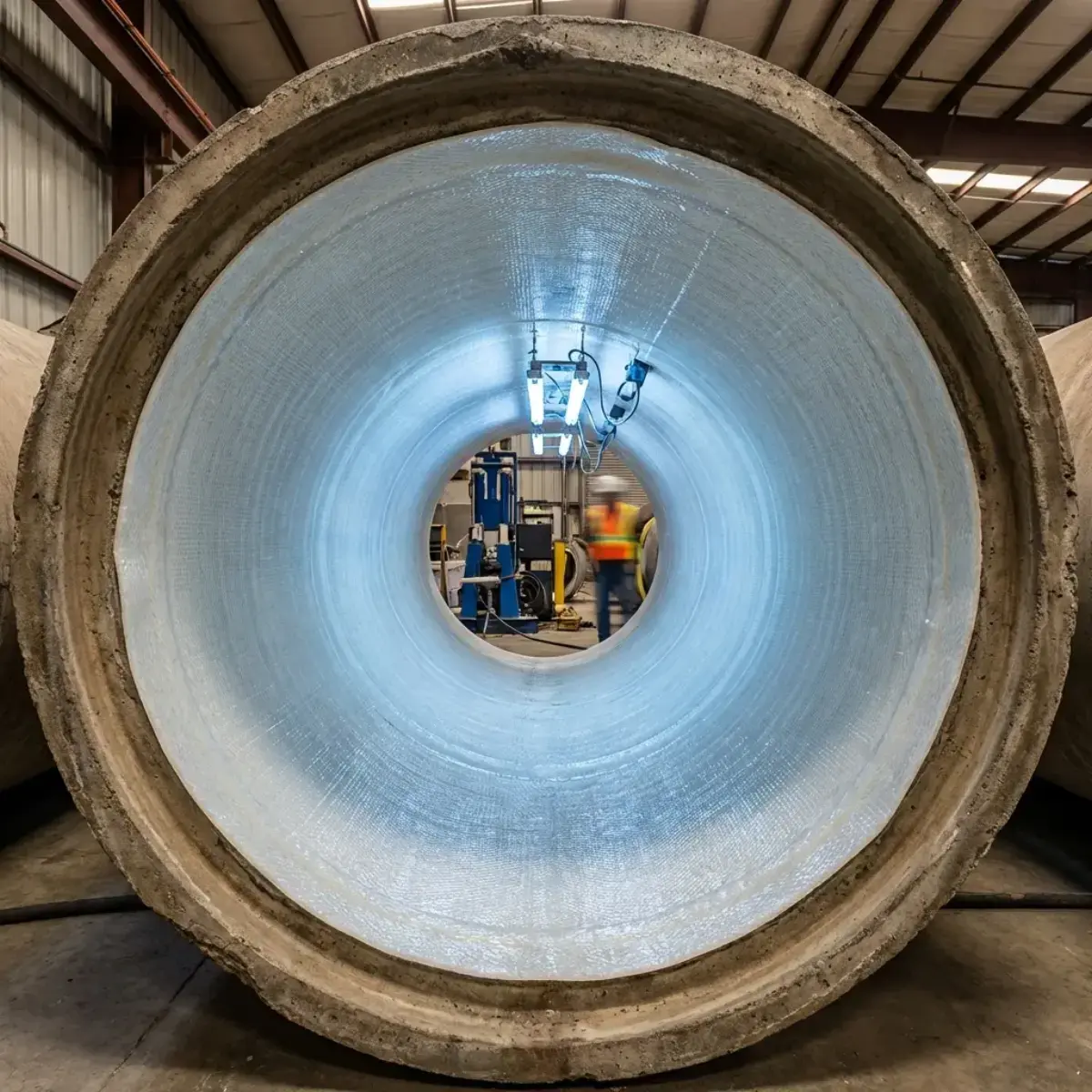
CIPP Liner Materials Guide: UV CIPP, Repair Fabrics and Wet-Out
Cured-in-place pipe (CIPP) is the dominant trenchless method for rehabilitating sewers, storm drains and industrial lines without excavation. The liner material decides wet-out speed, structural modulus, chemical resistance and cure reliability. This guide explains how CIPP liner materials are specified — from UV CIPP fiberglass and spot-repair composites to ISO 11296-4 / ASTM F1216 compliance — so engineers can choose the right fabric for DN200-DN3000 work.
What is a CIPP Liner?
A CIPP liner is a resin-impregnated reinforcement tube inverted or pulled into a host pipe and cured in place. After cure it becomes a close-fit structural pipe inside the old one. Compared with open-cut replacement, CIPP liner installation cuts traffic disruption, excavation cost and downtime, which is why municipalities specify CIPP sanierung / CIPP repair for ageing networks.
Performance depends on three layers working together: the host-pipe condition, the resin system (UPR, vinyl ester, epoxy or PU) and the glass reinforcement that carries hoop and axial load after cure. Poor fabric choice shows up as dry spots, wrinkles, under-cure or long-term creep.
UV CIPP vs Thermal Cure vs Spot Repair
• UV CIPP — a glass liner is impregnated, pulled in, inflated and cured with a UV train. Cycle times are short, styrene emission is lower than steam cure, and wall thickness is tightly controlled. This is the mainstream process for DN200-DN1200 municipal sewers.
• Thermal / steam CIPP — used on larger diameters and felt or hybrid liners. Heat-up and cool-down take longer; fabric must stay stable while the resin is still fluid.
• CIPP repair (spot / sectional) — a short composite packer repairs joints, cracks or laterals. Combo mats (woven roving + chopped strand) build thickness fast and wet out in under 60 seconds on site.
Fabric architecture should match the process: stitched multiaxial + chopped layers for UV CIPP; woven-roving combo mats for sectional CIPP repair.
CIPP Liner Materials and Fabric Architecture
ECR-glass (boron-free) is preferred over standard E-glass in CIPP liner materials because of better acid and hydrolysis resistance in sewage and industrial effluent. Typical constructions:
• Biaxial + chopped (ELTM series, 950-1200 gsm) — 0°/90° structural layers with a chopped-strand face for rapid resin take-up. Standard UV CIPP liner fabric.
• Woven roving combo (EWRM series, 860-1250 gsm) — woven structural core plus chopped mat. Used for both UV CIPP and CIPP repair where hoop strength and on-site wet-out both matter.
• Stitched mat (EMK) — binder-free chopped reinforcement that saturates in seconds; often combined with a sealing tissue.
Target wet-out of <=60 s keeps impregnation lines moving and reduces dry-spot risk. Moisture content should stay <=0.2% so UV initiation is not quenched.
Standards: ISO 11296-4, ASTM F1216 and Chemical Resistance
Two standards dominate CIPP liner specifications:
• DIN EN ISO 11296-4 — plastics piping systems for renovation of underground non-pressure drainage; Part 4 covers cured-in-place liners, including materials, dimensions and long-term properties.
• ASTM F1216 — practice for rehabilitation of existing pipelines with CIPP. Widely used in North America for design thickness and testing.
Resin choice follows the effluent: unsaturated polyester for municipal sewage, vinyl ester for industrial chemicals, epoxy where shrinkage and adhesion are critical. ECR-glass reinforcement is the common denominator when the liner must survive hydrogen sulphide, sulphuric acid condensate and groundwater infiltration for 50-year design lives.
Specifying CIPP Materials: Diameter, Thickness and Wet-Out
1. Diameter — match areal weight to DN. Lighter 860-1000 gsm stacks suit DN200-DN600; 1200-1250 gsm constructions are used up to DN3000 when structural contribution is required.
2. Wet-out — specify <=60 s resin impregnation on the actual resin, not a lab proxy. Binder-free stitched faces outperform powder-bound chopped mats here.
3. Moisture — keep fabric <=0.2% moisture; damp glass kills UV cure and creates under-cured rings.
4. Stretch and seam — UV CIPP liners need controlled hoop stretch so the tube seats without wrinkles. Seam construction must survive pull-in.
5. Repair vs full-length — do not use a full-length UV CIPP stack for a 1 m CIPP repair; a combo mat on a packer is faster, cheaper and easier to wet out in a manhole.
Zhongjie CIPP Liner Fabrics
Zhongjie manufactures ECR-glass CIPP liner materials for UV CIPP and CIPP repair: ELTM biaxial-plus-chopped stacks (950-1200 gsm) and EWRM woven-roving combo mats (860-1250 gsm), with wet-out <=60 s and moisture <=0.2%. Pipe diameters from DN200 to DN3000 are supported, and fabrics are specified against DIN EN ISO 11296-4 and ASTM F1216 programmes.
See our CIPP solution page for fabric codes, resin compatibility and sample requests.
More Technical Guides
EN 45545-2 Fire Safety Guide: Rail Interior Plastics vs Composites
Replace rail interior plastics with EN 45545-2 HL2/HL3 flame-retardant composites. Covers Brandschutz 45545, R1-R26 categories, FST testing, and GFK Brandschutz for Schienenfahrzeuge interiors.
Flame Retardant Battery Enclosures: Composites vs Aluminium vs Steel
Material guide for flame retardant battery enclosures and composite battery trays — aluminium vs steel vs glass-fibre composites, UL94 V-0 / GB 38031 / IEC 62619 fire standards, HP-RTM process, and weight comparison.
UAV Composite Materials Guide: Fuselage, Wings and NCF Fabrics
UAV composite material selection guide for drone fuselages, wings and airframes — ±45° biaxial NCF vs woven roving, carbon/glass hybrids, vacuum infusion and weight vs torsion stiffness.
Frequently Asked Questions
What materials are used for CIPP liners?
Most structural CIPP liner materials are ECR-glass reinforcements impregnated with polyester, vinyl ester, epoxy or PU resin. Common fabrics are biaxial-plus-chopped stacks and woven-roving combo mats in the 860-1250 gsm range, chosen for hoop strength and wet-out speed.
What is the difference between UV CIPP and CIPP repair?
UV CIPP installs a full-length glass liner and cures it with a UV train. CIPP repair (spot or sectional lining) uses a short composite packer to fix a local defect. Repair work typically uses combo mats that saturate in under 60 seconds.
Which standards apply to CIPP liner materials?
DIN EN ISO 11296-4 is the main European product standard for CIPP liners. ASTM F1216 is the widely used North American practice for design and installation. Municipal tenders often reference both plus local sewer authority specifications.
What pipe diameters can fiberglass CIPP liners cover?
Zhongjie CIPP liner fabrics are used from DN200 up to DN3000 mm. Lighter 860-1000 gsm constructions suit smaller sewers; 1200-1250 gsm combo mats are specified for large-diameter and industrial lines.
Why is ECR-glass preferred over E-glass in CIPP?
ECR-glass is boron-free and more resistant to acid and hydrolysis than standard E-glass. In sewage CIPP liners this improves long-term modulus retention against hydrogen sulphide and sulphuric acid condensate.